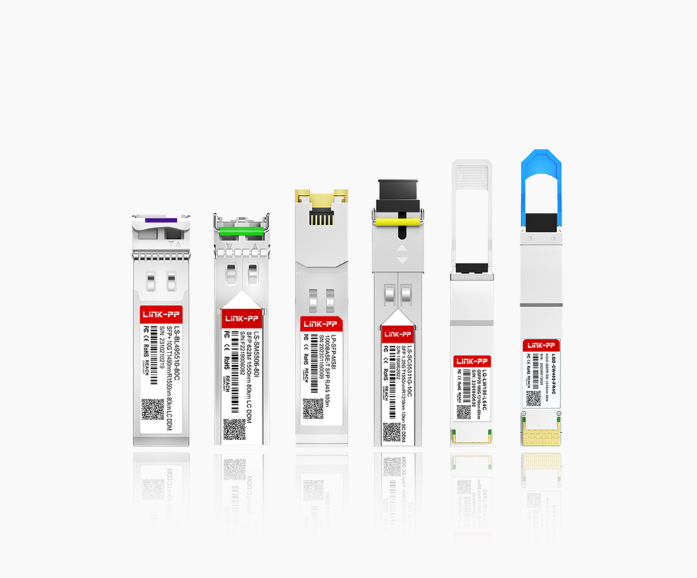
As enterprise networks, data centers, and service provider infrastructures continue to evolve, the demand for high-speed, long-distance optical connectivity has become increasingly critical. Among various 10G SFP optical modules, 10GBASE LR SFP+ transceivers have emerged as a widely adopted standard for stable, single-mode fiber transmission over extended distances. Their balance of performance, reach, and cost makes them a popular choice for both core and aggregation network layers.
However, when it comes to procuring 10GBASE LR SFP+ modules, buyers often encounter questions related to pricing differences, compatibility concerns, and value trade-offs between branded and compatible options. Factors such as vendor selection, optical components, and operating specifications can significantly influence purchasing decisions. Understanding these elements is essential to avoid unnecessary costs or deployment risks.
This guide is designed to provide a clear and practical overview of 10GBASE LR SFP+ optical transceivers, with a particular focus on pricing considerations. From fundamental definitions and application scenarios to cost drivers and sourcing tips, this article aims to help network planners and procurement teams make informed, cost-effective decisions.
🧩 Introduction to 10GBASE LR SFP+ Optical Transceiver
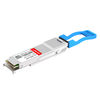
The 10GBASE LR SFP+ fiber optic transceiver is a 10G Ethernet module designed for long-distance transmission over single-mode fiber. It is commonly used in enterprise, data center, and telecommunications environments to meet the demands for stable, high-speed connections for long-distance data transmission.
What Does 10GBASE LR Mean
10GBASE LR refers to a 10G Ethernet standard defined by IEEE 802.3ae. In this naming convention, “10G” represents a data rate of 10 gigabits per second, “BASE” indicates baseband transmission, and “LR” stands for long reach. This standard is designed to support transmission distances of up to 10km over single mode fiber using a 1310nm wavelength.
From a hardware perspective, 10GBASE LR is typically implemented in the SFP+ (enhanced small form-factor pluggable), which allows for high port density and hot-pluggable installation. Compared to other 10G standards, LR is optimized for longer-distance links while maintaining stable signal integrity and low latency, making it suitable for data centers, campuses, or metropolitan area networks where longer distances are required.
Key Deployment Scenarios of 10GBASE LR SFP+
10GBASE LR SFP+ transceivers play a vital role in various network environments. They support high-performance data transmission and are valued for their ability to deliver stable connectivity over extended distances. Specific deployment scenarios include:
- Data Center Interconnection (DCI): Used to connect switches or routers between data centers or separate buildings within a campus environment.
- Enterprise Core and Aggregation Networks: Ideal for uplinks between access switches and core switches requiring long-distance coverage.
- Telecom and ISP Networks: Frequently deployed in metro and access networks to support high-bandwidth services over extended fiber links.
- Industrial and Campus Networks: Suitable for environments where network nodes are distributed over large physical areas.
How Much Does 10GBASE LR SFP+ Typically Cost
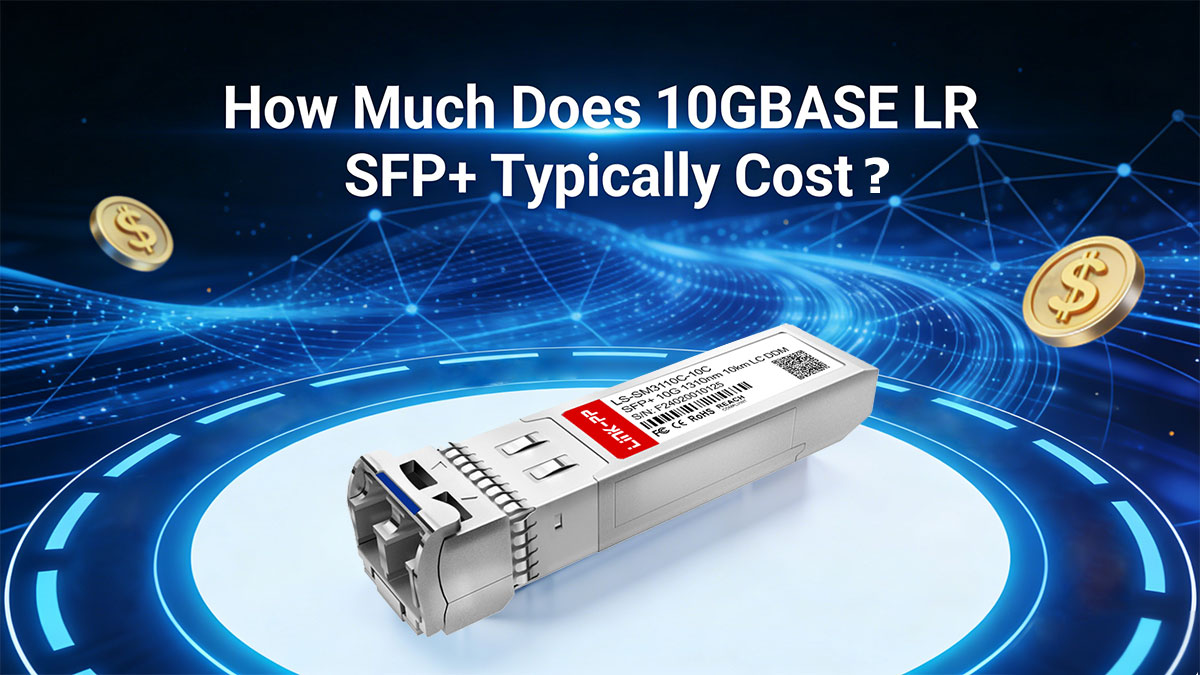
The 10GBASE LR SFP+ module price generally falls within a mid-range category among 10G optical modules. As a general range, the cost can span from approximately $30 to $100 or more per module. Costs can vary widely depending on factors such as brand reputation, optical component quality, supported features like Digital Diagnostics Monitoring (DDM), and the specified operating temperature range.
In the market, pricing typically spans from budget-friendly compatible 10GBASE LR SFP+ modules to higher-priced OEM-branded options. This wide range allows buyers to choose solutions that align with their performance requirements and budget constraints, especially when balancing large-scale deployments against long-term network reliability.
🧩 How 10GBASE LR SFP+ Differs from Other 10G Modules
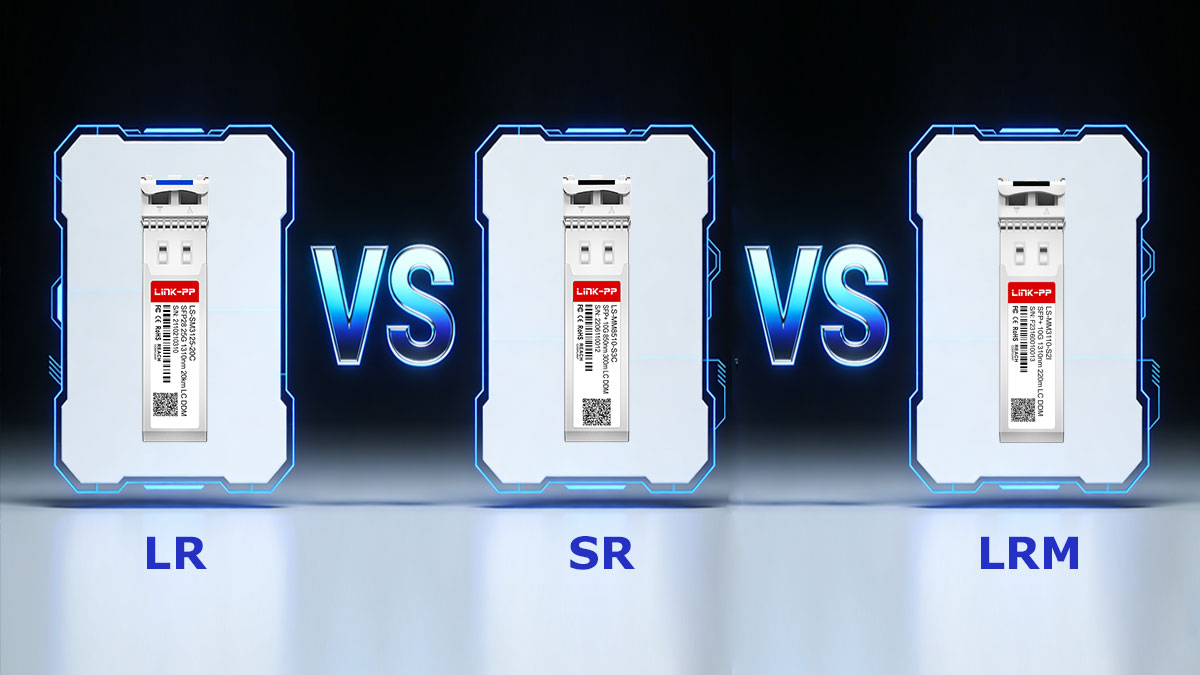
The 10GBASE LR SFP+ transceiver stands out among other 10G optical modules because of its long transmission reach, stable performance, and versatility in enterprise and data center networks. Unlike other 10G modules designed for shorter distances or specific fiber types, the LR module provides a balanced option for medium- to long-distance connections using single mode fiber (SMF).
10GBASE LR SFP+ VS 10GBASE SR SFP+
When comparing cost, 10GBASE SR SFP+ modules are generally the most economical choice among 10G optical modules. This lower price point is primarily due to their use of lower-cost 850nm VCSEL (Vertical-Cavity Surface-Emitting Laser) technology and their design for short-distance transmission over multimode fiber (MMF), which keeps manufacturing complexity and component costs down.
In contrast, the 10GBASE LR SFP+ commands a higher price. The increased cost is attributed to its use of more sophisticated 1310nm DFB (Distributed Feedback) lasers, which are necessary for achieving long-distance transmission over single mode fiber (SMF). The precision required for coupling light into the much thinner SMF core and the overall higher-performance components directly contribute to its premium over the SR module.
The following table summarizes their key specification differences.
| Specification |
10GBASE LR SFP+ |
10GBASE SR SFP+ |
| Transmission Distance |
Up to 10km |
300m (OM3), 400m (OM4) |
| Fiber Type |
Single Mode Fiber (SMF) |
Multimode Fiber (MMF: OM3/OM4) |
| Wavelength |
1310nm |
850nm |
| Optical Laser |
DFB Laser |
VCSEL Laser |
| Power Consumption |
~1.0W - 1.5W |
~0.5W - 1.0W |
| Application |
Inter-building or Long Data-center Links |
Intra-rack or Short Data-center Links |
| Cost Efficiency |
Higher |
Lower |
10GBASE LR SFP+ VS 10GBASE LRM SFP+
While 10GBASE LR and LRM SFP+ modules are designed for use over legacy multimode fiber, their approaches and costs differ significantly. The 10GBASE LRM SFP+ is typically more expensive than standard SR modules but often comparable to or slightly lower in cost than LR modules. Its price reflects the complex electronics required for its Dispersion Compensation functionality, which is needed to overcome modal dispersion on long MMF runs.
The 10GBASE LR SFP+, operating on single-mode fiber, avoids the dispersion issues of MMF altogether and achieves a true 10km reach. Its cost is driven by the DFB laser and SMF optics. While the LRM offers a migration path for installed MMF, its practical, guaranteed reach is limited to 220m on OM1/OM2 fiber, and it can be sensitive to fiber conditions like differential mode delay. The LR SFP+ provides a more robust and high-speed connectivity performance for single mode fiber applications used for long-distance transmission.
The table below outlines a detailed breakdown of the key specification differences between the two 10G SFP+ transceivers.
| Specification |
10GBASE LR SFP+ |
10GBASE LRM SFP+ |
| Transmission Distance |
Up to 10km |
220m (OM1/OM2), 300m (OM3/OM4) |
| Fiber Type |
Single Mode Fiber (SMF) |
Multimode fiber (MMF) |
| Wavelength |
1310nm |
1310nm |
| Optical Laser |
DFB Laser |
DFB Laser with Dispersion Compensation |
| Use Case |
Long-distance Data Center |
Enterprise & Campus |
| Cost Efficiency |
Higher (Suitable for Long-distance Links) |
Lower (Suitable for Short-distance Links) |
🧩 Factors Affecting The 10GBASE LR SFP+ Module Price
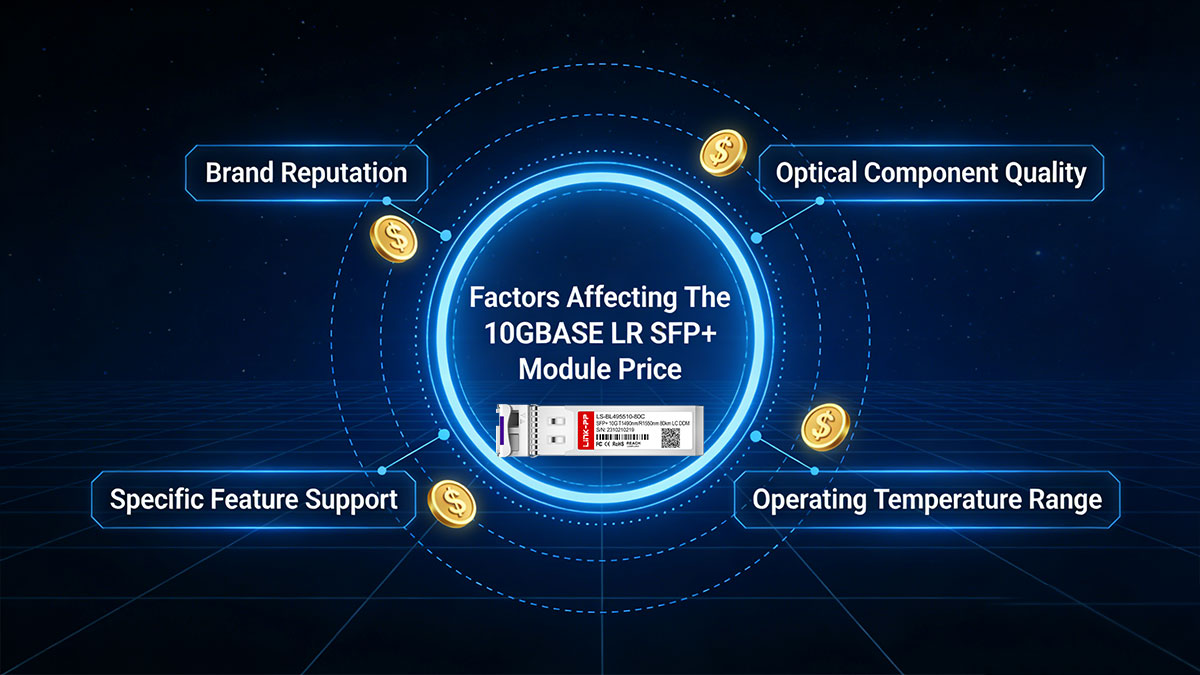
The cost of a 10GBASE LR SFP+ can vary widely based on multiple technical and market-driven factors. Elements such as brand reputation, optical component quality, feature support, and temperature specifications all contribute to cost differences. Understanding these aspects can help you make smarter buying decisions that balance performance reliability with budget efficiency.
Brand Reputation
Brand reputation strongly affects the 10GBASE LR SFP+ module price. Established brands like Cisco, Juniper, Arista, or Intel charge more due to proven quality control, advanced testing, and strong customer support. Conversely, reputable compatible SFP+ modules from third-party suppliers like LINK-PP offer the same functionality and interoperability at a fraction of the cost, as they invest less in brand marketing but maintain rigorous production standard.
Optical Component Quality
The optical components inside a 10GBASE LR SFP+, such as the laser diode and photodiode, play a major role in price formation. Modules using high-grade DFB lasers and low-noise receivers generally cost more due to superior performance and durability. Premium components ensure consistent signal stability over long distances — up to 10km — and offer better tolerance to optical losses, reducing link failures and maintenance effort.
Specific Feature Support
Certain 10GBASE LR SFP+ transceivers include advanced features that increase cost, for example, Digital Diagnostics Monitoring, which allows for monitoring of temperature, bias current, transmit and receive optical power. Modules supporting hot-swappable interoperability or multi-vendor compatibility often require additional firmware optimization and calibration. These added functionalities enhance manageability in large-scale networks but naturally raise the manufacturing and validation costs.
Operating Temperature Range
The supported operating temperature range is another pricing determinant. Standard commercial-grade 10GBASE LR SFP+ modules typically function from 0°C to 70°C, while industrial-grade models rated from – 40°C to 85°C cost significantly more. The latter use specialized materials and undergo extensive stress testing to ensure reliability in outdoor or harsh environments such as industrial automation or wireless backhaul applications.
🧩 OEM VS Compatible 10GBASE LR SFP+: Which Offers Better Value

When evaluating 10GBASE LR SFP+ optical modules, buyers often compare original OEM modules and third-party compatible modules. While OEM modules offer assured compatibility, third-party modules from a trusted supplier can deliver comparable performance, reliability, and interoperability across major transceiver brands at a significantly lower total cost of ownership, making them a compelling value proposition for scalable deployments.
Compatibility and Quality
Third-party suppliers such as LINK-PP craft compatible 10GBASE LR SFP+ modules that mirror OEM standards in laser type, wavelength tuning, and digital diagnostic monitoring. Each module undergoes compatibility programming to align flawlessly with brands like Cisco, Arista, Juniper, or Dell. Rigorous testing ensures identical transmission performance and error-free operation over 10km on single mode fiber, achieving OEM-grade functionality with consistent quality assurance.
Warranty and Support
OEM vendors typically provide brand-linked warranties and proprietary support, but third-party suppliers now offer similar or extended warranties with faster response times. LINK-PP, for instance, ensures every 10GBASE LR SFP+ module comes with full technical support, 3-year warranty and immediate replacements for defects. Their after-sales services are designed to mirror OEM reliability while maintaining direct communication with customers to shorten ticket resolution cycles.
Cost and Value
The most significant advantage of third-party 10GBASE LR SFP+ modules is price efficiency. LINK-PP SFP transceiver module often cost 30% – 70% less than OEM parts while maintaining the same optical specifications and low failure rates. Bulk purchasing terms further reduce per-unit cost, offering data centers substantial savings with no performance compromise. For expanding networks or multi-vendor environments, compatible third-party modules provide the best balance between investment efficiency and operational stability.
🧩 How to Choose The Right 10GBASE LR SFP+ Transceiver
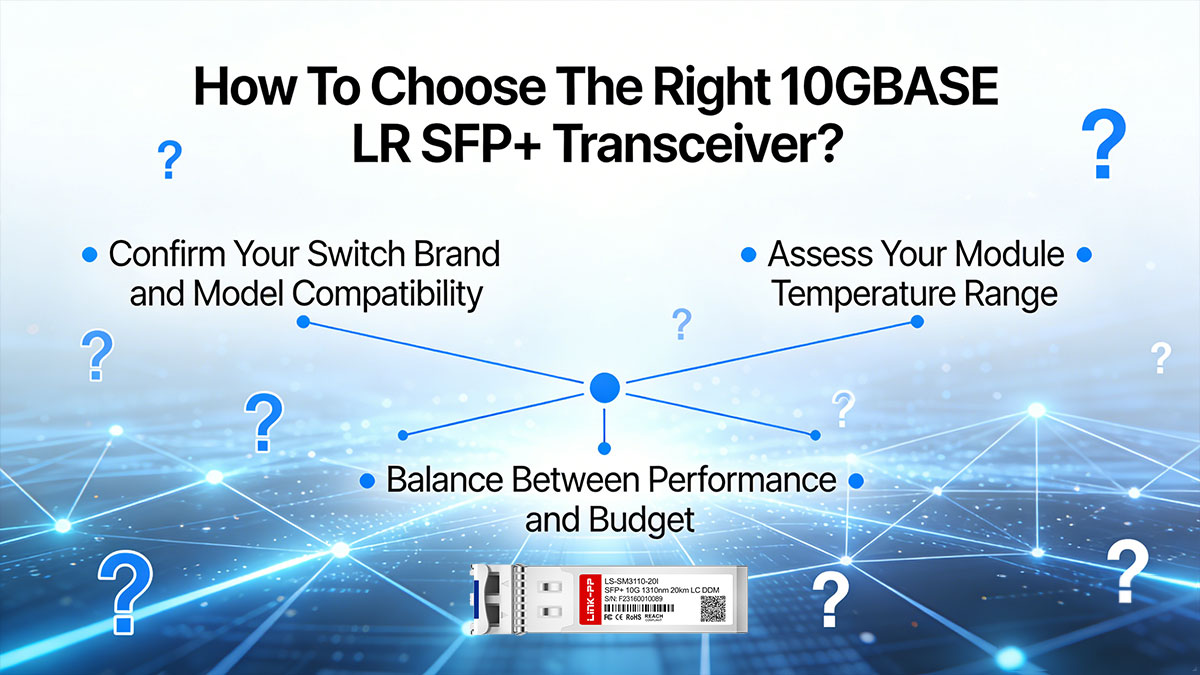
Selecting the right 10GBASE LR SFP+ transceiver ensures stable 10G performance and long-term network reliability. Consider factors such as switch compatibility, operating environment, and performance-to-cost balance to make a well-informed buying decision.
Confirm Your Switch Brand and Model Compatibility
Before purchasing, check whether the SFP+ 10GBASE LR module is compatible with your network switch’s brand and firmware version. Some switches require specific coding for recognition. Using vendor-certified or tested compatibility lists helps avoid detection errors, ensuring seamless interoperability and full performance functionality.
Assess Your Module Temperature Range
Evaluate your deployment network operating environment temperature. Always match the transceiver’s rated temperature range to your deployment conditions. Standard commercial modules support 0 °C to 70 °C, while industrial-grade ones withstand - 40 °C to 85 °C. Choosing the proper specification protects against signal instability or premature failure in environments like outdoor cabinets or data center hot aisles.
Balance Between Performance and Budget
For latency-sensitive applications like data centers or financial trading networks, investing in premium SFP+ 10G LR modules with low jitter and precise wavelength control ensures stable transmission and minimal downtime. However, for enterprise office links or campus networks with shorter runs and moderate traffic, cost-effective compatible modules without advanced monitoring features often deliver equal reliability, offering excellent value for daily operations.
🧩 Tips to Verify 10GBASE LR SFP+ Compatibility Before Bulk Purchase
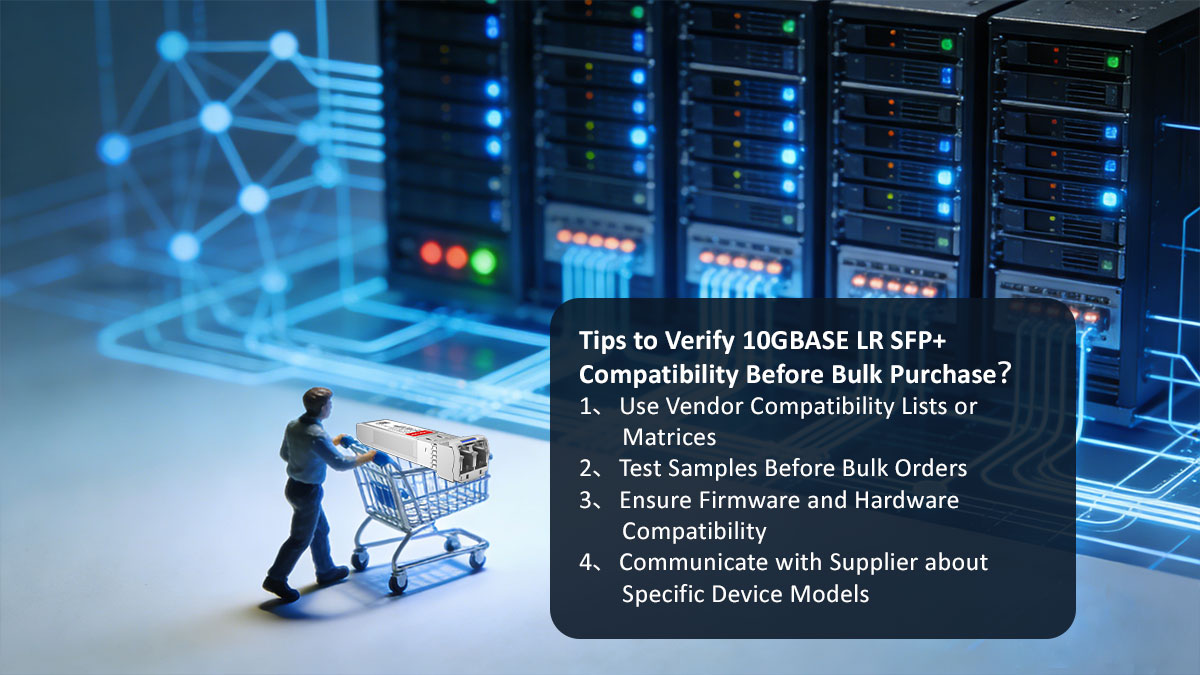
Before placing a bulk order for 10GBASE LR SFP+ fiber modules, it’s crucial to confirm their compatibility with your network devices. Proper verification not only prevents costly deployment issues but also ensures optimal performance and long-term stability across your infrastructure.
Use Vendor Compatibility Lists or Matrices
Most switch vendors release official compatibility lists or matrices specifying which transceivers are tested and supported. Always refer to these resources to verify model numbers, firmware versions, and supported optical standards. Doing so reduces the risk of link failures or unexpected downtime during integration.
Test Samples Before Bulk Orders
Prioritize ordering physical samples from your shortlisted supplier to perform real-world testing in your actual network environment. Use the same fiber type, link distance, and operating environment planned for deployment. This approach minimizes compatibility uncertainty and validates that the modules meet your operational requirements.
Ensure Firmware and Hardware Compatibility
Firmware mismatches between switches and SFP+ modules can cause recognition errors or unstable connections. Before bulk purchase, confirm that your network hardware’s current firmware supports the intended transceiver. Additionally, verify that both hardware and firmware revisions align with the vendor’s interoperability recommendations.
Communicate with Supplier about Specific Device Models
Provide your supplier with detailed information about your switch or router models, including software version and intended link distance. Reliable vendors can perform compatibility cross-checks or pre-code modules accordingly. Clear communication ensures correct EEPROM coding, plug-and-play installation, and reduced troubleshooting after deployment.
🧩 Sourcing 10GBASE LR SFP+ from A Trusted Supplier — LINK-PP
When choosing 10GBASE LR SFP+ modules, partnering with a reliable supplier ensures consistent quality and long-term stability in your network. LINK-PP stands out for its strict testing standards, cost-effective pricing, and excellent after-sales service, making it a reliable source for SFP transceiver module
Rigorous Quality Assurance and Testing Process
Every LINK-PP 10GBASE LR SFP+ module undergoes multiple inspection stages, including signal integrity evaluation, optical power measurement, and compatibility verification with major switch brands like Cisco and Arista. Models such as LS-SM3110-10C 10GBASE LR and LS-SM3110-10I 10Gb LR SFP are batch-tested in high-temperature environments to guarantee reliability in commercial or industrial conditions.
Competitive Pricing and Global Delivery Advantages
LINK-PP offers direct factory pricing without intermediary markups, allowing customers to achieve substantial cost savings, particularly on bulk orders. We help reduce procurement expenses without compromising optical precision or SFP module quality. With efficient international shipping services covering most countries and regions, LINK-PP ensures timely delivery and reliable global reach.
Responsive Technical Support and Warranty
LINK-PP maintains a dedicated technical support team that provides comprehensive after-sales assistance, including fast compatibility checks, detailed installation guidance, and effective troubleshooting support. Each 10GBASE LR SFP+ transceiver is backed by a solid warranty, ensuring performance reliability and protection against hardware defects. Beyond core support, LINK-PP offers custom services, such as firmware optimization and custom configuration, to meet diverse network infrastructure and vendor integration requirements.
🧩 Top FAQs on 10GBASE LR SFP+
Common questions about 10GBASE LR SFP+ modules are addressed here, covering cost, compatibility, transmission distance, and performance. Whether you are planning a new deployment or upgrading an existing network, these quick insights help you make informed buying decisions.
What is the typical price range for 10GBASE LR SFP+ modules?
The price of 10GBASE LR SFP+ modules usually ranges from $30 to $100, depending on the brand, features, and vendor. OEM modules cost more, while third-party compatible SFP transceivers offer similar performance at lower prices for large-scale purchases.
Can 10GBASE LR SFP+ work with different switch brands?
Most third-party compatible 10GBASE LR SFP+ modules support multiple switch brands like Cisco, Juniper, HP, and Dell. However, compatibility depends on the vendor’s coding and firmware match, making it vital to verify support before bulk procurement.
What’s the maximum distance for 10GBASE LR SFP+?
A 10GBASE LR SFP+ transmits data up to 10km over standard single mode fiber. The module usually works at a 1310nm wavelength and delivers consistent 10Gbps performance over long distances, making it suitable for applications like data center interconnects, metro Ethernet, and enterprise backbone networks.
Can I use 10GBASE LR SFP+ modules on multimode fiber?
10GBASE LR SFP+ modules are designed exclusively for single mode fiber and cannot be used with multimode fiber. Mixing them causes severe signal loss and link instability because of core size mismatch and wavelength differences, resulting in unreliable or failed transmission.
Do all 10GBASE LR SFP+ modules support DOM/DDM?
No, not all 10GBASE LR SFP+ modules include Digital Optical Monitoring (DOM) or Digital Diagnostic Monitoring (DDM) capabilities. This feature, which allows real-time monitoring of temperature, optical power, and bias current, is typically specified as an optional add-on and may influence the module's final price.
Is the 10GBASE LR SFP+ backward compatible with 1G connections?
10GBASE LR SFP+ modules are not backward compatible with 1G SFP ports due to different signaling and hardware requirements. To maintain compatibility, use corresponding 1G modules in legacy switches designed for Gigabit Ethernet speeds.
🧩 Conclusion: Thinking about Getting 10GBASE LR SFP+ Optical Modules?
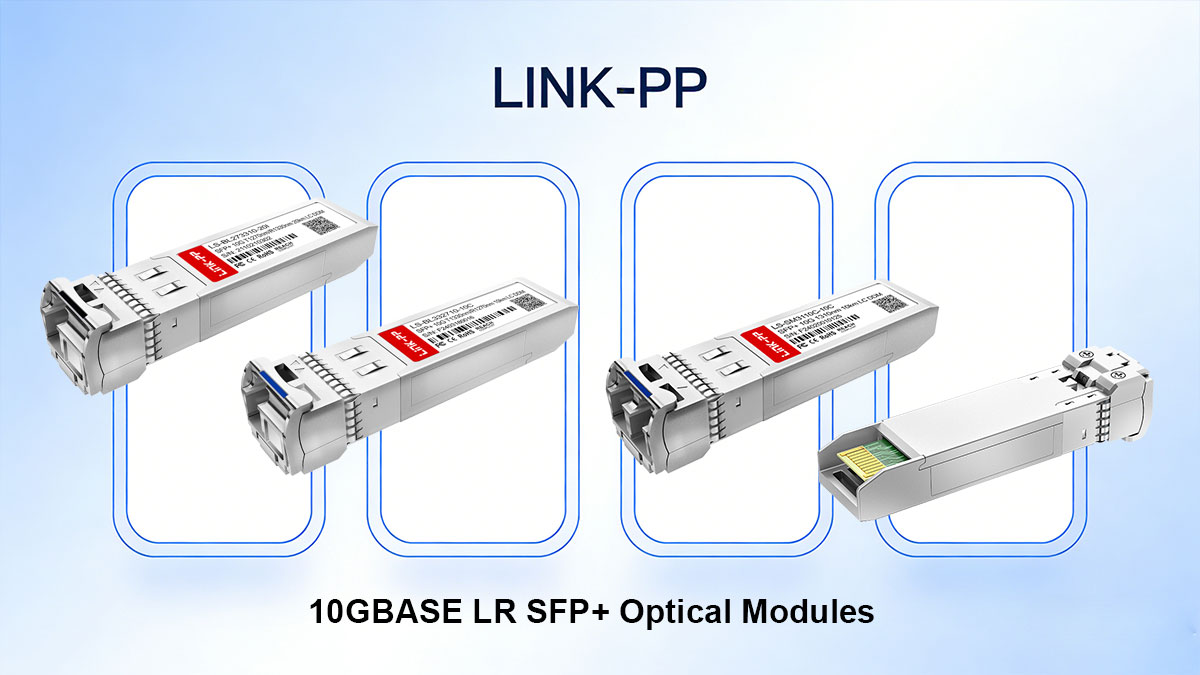
When it comes to optimizing your 10G networking infrastructure, 10GBASE LR SFP+ optical modules remain one of the most cost-effective and reliable solutions for enterprises and data centers that require stable long-distance connectivity. Throughout this guide, we’ve covered the essential factors you should understand before making your purchase decision. Let’s summarize the main points.
- Cost Insights: Prices generally range from $30 – $100 per module, driven by brand reputation, component quality, DDM support, and temperature specifications. While OEM-branded modules tend to cost more, reputable third-party alternatives deliver comparable performance at a significantly lower total cost.
- Module Comparisons: Compared with 10GBASE SR and LRM, the LR model achieves the best balance of reach and stability. While SR is ideal for short-range intra-rack links, LR stands out for spanning long distances without requiring dispersion correction or fiber upgrades.
- Pricing Factors: Primary pricing drivers include laser type (DFB for long-range accuracy), temperature range (industrial vs. commercial grade), and manufacturing precision. Understanding these determinants helps align your investment with actual performance needs.
- OEM vs. Compatible Modules: Third-party suppliers such as LINK-PP provide fully compatible 10GBASE LR SFP+ transceivers that undergo rigorous quality testing and firmware coding for seamless interoperability with major switch brands (Cisco, Arista, Juniper, etc.). LINK-PP SFP models often cost 30–70% less than OEM counterparts while maintaining equivalent durability and signal integrity.
- Selecting the Right Model: Always verify switch model compatibility, firmware support, and environmental conditions before deployment. Proper validation—such as ordering test samples—prevents costly downtime and ensures a smooth plug-and-play installation.
In today’s network landscape, the right 10GBASE LR SFP+ module can define your network’s efficiency, reliability, and cost sustainability. Whether you’re expanding backbone capacity, interconnecting multiple data centers, or upgrading access-layer uplinks, choosing a trustworthy supplier guarantees both technical performance and financial advantage.
For high-quality, fully compatible 10GBASE LR SFP+ transceivers backed by rigorous testing and competitive pricing, explore the LINK-PP Official Store today. Unlock a high-performance optical module at a fraction of the OEM cost and bring efficient solutions to your 10G network infrastructure.